The Founder Fight Usually Started in the Contract
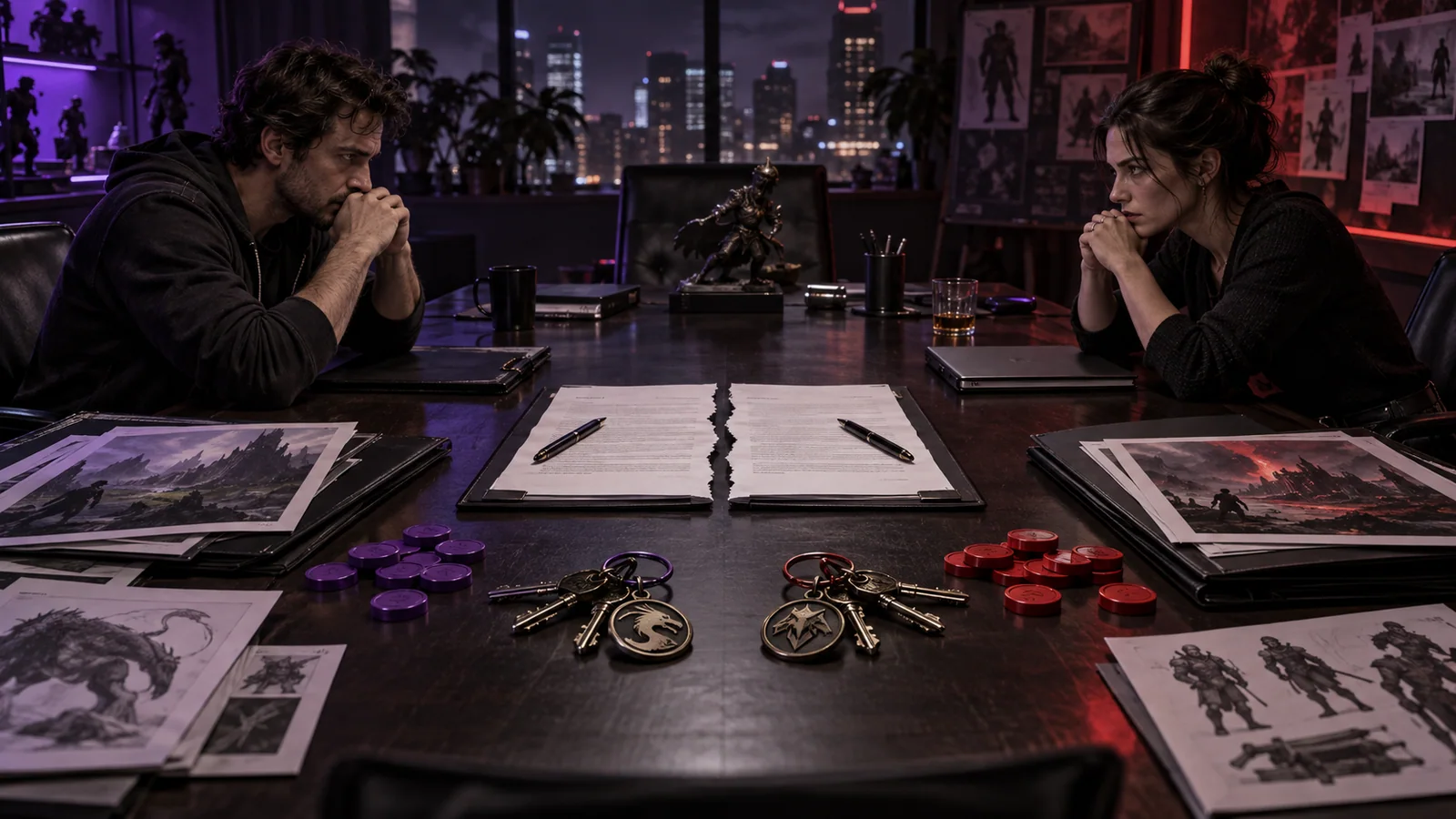
Fans describe founder breakups as personality clashes. The expensive part is usually structural: one person created the character, another owns company shares, the company registered the trademark, a publisher controls distribution, and nobody wrote a clean departure path.
WIPO’s game-industry guidance emphasizes that games combine code, art, music, characters, tools, names, and contracts. “I invented it” is not a complete ownership analysis.
Build the control map
Record separately:
- company equity and voting rights;
- employment and board authority;
- copyright ownership and assignments;
- trademarks and domains;
- licensed engines, music, and third-party assets;
- sequel, merchandising, and adaptation rights;
- repository, store, bank, and platform accounts;
- departure, deadlock, buyout, and credit terms.
The map will not prevent conflict. It prevents conflict from becoming an archaeological dig.
The spicy lesson
Friendship is not a governance system. The best time to document a fair exit is when nobody wants one.
Sources
This is business education, not legal advice.
Key takeaway
Separate creative origin from legal control and operational access. A founder dispute is survivable when the rights map existed before the relationship broke.
game foundersIP ownershipstudio contractsfounder fallout